What to do in the first 24 hours after a car accident in Hartford
By Hannah Delgado · Updated 2026-06-24
The first 24 hours after a car accident set the tone for everything that follows, whether that means a smooth insurance claim or a drawn-out dispute. Here is a practical order of operations for what to do, separate from any legal strategy.
At the scene
Check for injuries first, yours and anyone else involved, and call 911 if anyone needs medical attention. Move vehicles out of traffic only if it is safe to do so. Call the police even for accidents that look minor; a report creates an official record that matters more than people expect once a claim moves forward in the car accident space.
Document everything before you leave
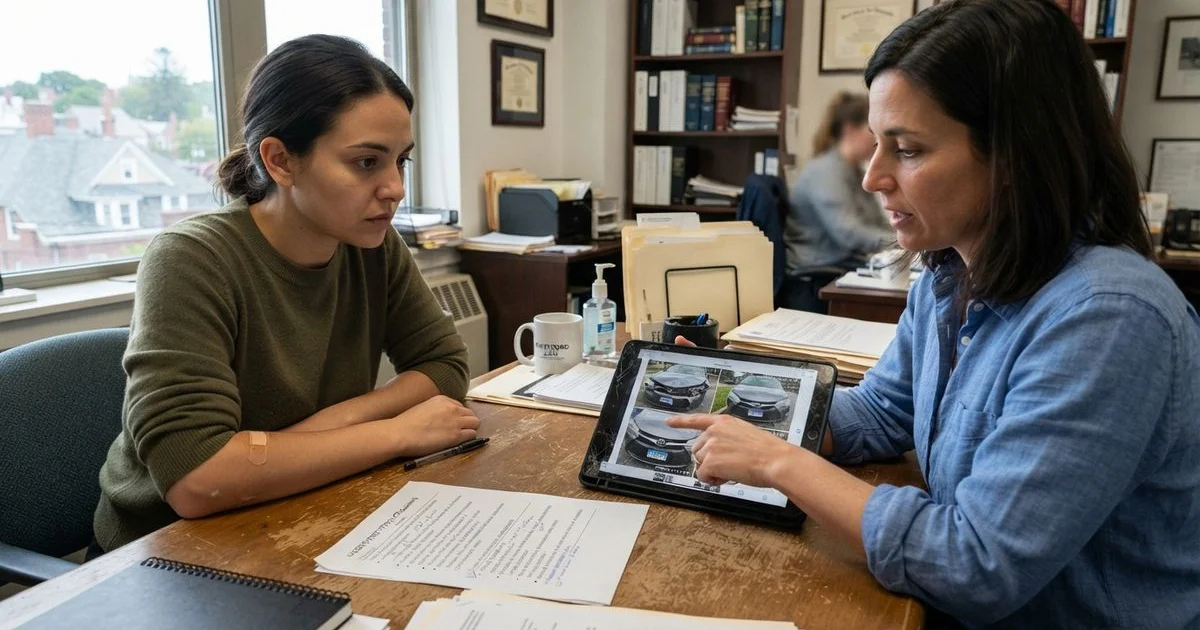
Take photos of both vehicles, the license plates, the surrounding scene, and any visible road hazards or skid marks. Exchange names, contact information, and insurance details with the other driver. If anyone witnessed the accident, get their contact information too; independent witnesses are often more persuasive than either driver’s account.
Get checked out, even if you feel fine
Adrenaline is real, and it can mask pain from whiplash, a concussion, or a soft-tissue injury for hours or even a day. See a doctor or go to urgent care within a day or two, both for your health and because a documented gap between the accident and your first medical visit is one of the easiest things an insurer points to when disputing a claim later.
Notify your own insurer, carefully
Most policies require you to report an accident promptly, so contact your own insurance company with the basic facts: date, location, and that an accident occurred. Be more cautious with the other driver’s insurance company. You are not generally required to give them a recorded statement, and it is common advice to hold off until you understand your options, since early statements can be used to argue fault later.
A quick reference for the first day
| Step | Why it matters |
|---|---|
| Call 911 if anyone is hurt | Safety first, and creates an official record |
| File a police report | Documents the accident even if damage looks minor |
| Photograph the scene | Evidence disappears fast once vehicles are moved or repaired |
| Get witness contact info | Independent accounts carry weight later |
| See a doctor within a day or two | Protects your health and documents injuries early |
| Notify your own insurer | Most policies require prompt reporting |
What to avoid saying, and to whom
Apologizing, guessing at fault, or speculating about how fast you or the other driver were going can all end up in a report or a recorded statement, even said casually at the scene. Stick to facts when speaking with police: what you saw, where you were, what happened as best you understand it. Save the more detailed reconstruction of exactly what happened for a conversation with your own insurer or an attorney, once the adrenaline has worn off and you have had time to think it through clearly.
If the vehicle needs to be repaired
Before you send your car off for repairs, make sure you have photographed the damage thoroughly, and confirm your insurer has what it needs to assess the claim. Once a vehicle is repaired, some of the physical evidence of the crash, like the exact extent and pattern of damage, is gone. This matters not just for the property damage claim itself, but sometimes for the injury claim too, since vehicle damage can be one piece of evidence supporting how forceful the impact was.
If you were a passenger, not the driver
If you were riding in a vehicle rather than driving, the same first steps generally apply: get checked out, document what you can, and get contact information for everyone involved, including the driver you were riding with. Passengers can generally pursue a claim against whichever driver was at fault, including the driver of the car they were in, which is a distinct question from anything the driver’s own insurance dispute might involve.
When to bring in an attorney
If the other driver disputes fault, if your injuries need more than a single urgent care visit, or if the insurance company starts pushing for a quick settlement, it is worth a free consultation before agreeing to anything. There is no cost to asking questions early, and doing so before you have signed anything or given a recorded statement gives an attorney the most room to help.
This is general information, not legal or medical advice. Every accident is different, and a licensed Connecticut attorney can advise you on the specifics of your situation.
See our full directory of car accident attorneys, or read our methodology for how listings are ranked.
FAQ
- Should I call the police even for a minor accident?
- Generally yes. A police report creates an official record of the accident, which matters even if damage looks minor, since injuries and vehicle damage can turn out to be worse than they first appear.
- What should I say to the other driver's insurance company?
- As little as possible until you have thought it through. Give basic facts if asked, but avoid guessing about fault, speed, or injuries, and avoid giving a recorded statement without first understanding your options.
- Do I need to see a doctor if I feel okay?
- Yes, within a day or two if possible. Adrenaline can mask injuries, and a documented gap between the accident and your first medical visit can be used to question your claim later.
- How soon after an accident should I talk to an attorney?
- There is no strict rule, but earlier is generally better, especially if fault is disputed or injuries are more than minor, since early evidence and statements can shape the whole case.
Related on this site
- Browse car accident attorney providers
- What affects your car accident settlement value in Hartford
- How a car accident injury claim works in Hartford, step by step
- Why you should see a doctor after a car accident, even if you feel fine
- Slip and fall at a Hartford business: what to do right after it happens
- All guides →