
Injured at work in Connecticut: the first steps to protect your claim
By Hannah Delgado · Updated 2026-06-26
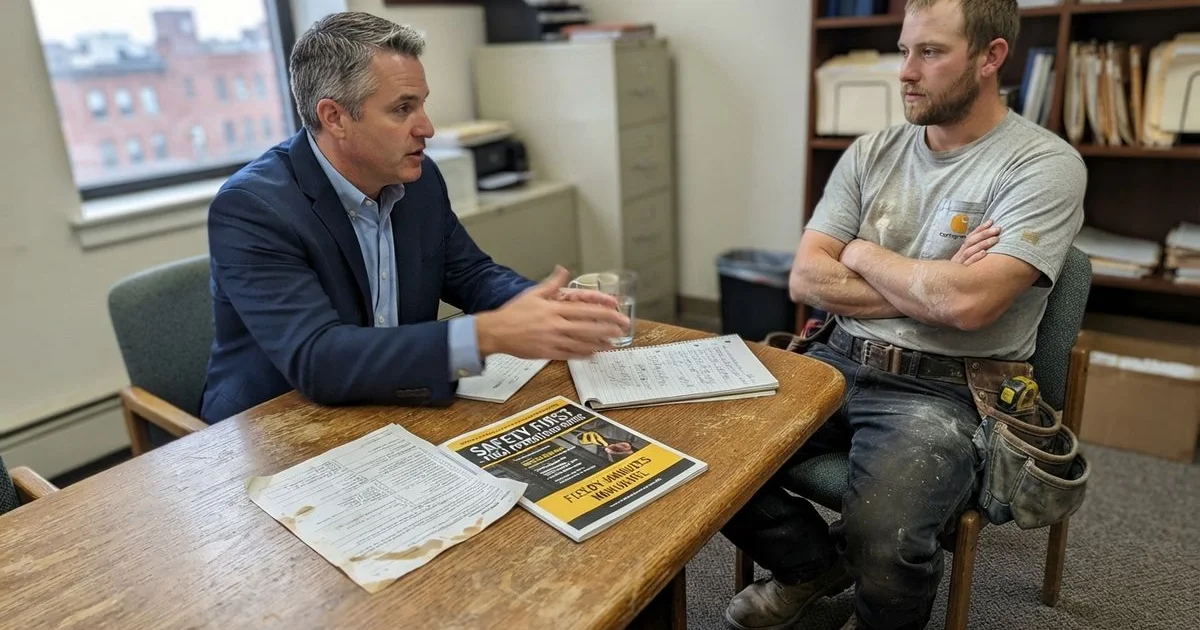
A workplace injury in Connecticut starts a clock, and what you do in the first few days shapes how smoothly your claim moves, whether it is a back strain from lifting or something more serious.
Report it the same day
Tell your supervisor immediately, and put it in writing if your workplace allows it, even for something that feels minor at first. Connecticut requires prompt notice of a workplace injury, and a delay of even a few days can give an employer’s insurer grounds to question whether the injury actually happened on the job. This is one of the most common, and most avoidable, mistakes in the workers’ compensation process.
Get medical treatment right away
Seek care as soon as possible, following whatever process your employer has for approved providers if one applies. Beyond your health, this creates a medical record tying the injury directly to the date it happened, which matters if your employer or their insurer later disputes the claim.
Document what happened while it is fresh
Write down exactly what you were doing, what equipment or conditions were involved, and who else was nearby. If coworkers witnessed the incident, get their names. If unsafe equipment or a hazardous condition contributed to the injury, photograph it before it gets fixed or removed.
What to expect in the first two weeks
| Step | What typically happens |
|---|---|
| Day of injury | Report to supervisor, seek medical care |
| Within days | Employer notifies their workers’ comp insurer |
| 1-2 weeks | Insurer opens the claim, may request medical records |
| 2-4 weeks | First benefit payment, if the claim is accepted without dispute |
If the injury is not straightforward, the insurer may request an independent medical exam or dispute the claim outright, which extends this timeline considerably.
Retaliation is not something you have to accept
It is against the law for an employer to fire, demote, or otherwise punish an employee for filing a legitimate workers’ compensation claim. In practice, retaliation is rarely announced outright; it shows up more as a sudden shift in treatment, a poor performance review that appears out of nowhere, or a reduction in hours shortly after you report an injury. If this happens to you, document the timeline in writing and raise it with an attorney, since retaliation claims are a separate legal issue from the injury claim itself.
What if you are an independent contractor
Workers’ compensation generally covers employees, not independent contractors, but the line between the two is not always where an employer says it is. Some workers classified as contractors are functionally treated like employees in terms of schedule, supervision, and equipment, which matters if a dispute arises over whether you are covered at all. If your employer disputes your eligibility on these grounds, that classification question is worth raising with an attorney early rather than assuming the employer’s label settles the matter.
Watch for these warning signs
An employer discouraging you from reporting the injury or filing a claim. An insurer requesting an independent medical exam that seems designed to downplay your injury rather than confirm it. Unusual delay with no explanation. Any of these are reasons to get an attorney involved rather than continuing to handle the claim alone.
Repetitive stress and gradual injuries
Not every workplace injury comes from a single incident. Repetitive strain injuries, hearing loss from long-term noise exposure, or back problems that build up over months of physical work are generally still covered, but they can be harder to pin to a specific reporting date. If your injury developed gradually, report it as soon as you recognize the connection to your work, and be as specific as possible with your doctor about the type of work and how long the exposure or strain has been happening.
A note on third parties
If someone other than your employer contributed to your injury, such as a subcontractor, property owner, or equipment manufacturer, you may have options beyond workers’ comp. That is a separate legal question from the immediate steps above, and one worth raising with an attorney once your claim is underway.
This is general information, not legal advice. Workplace injury rules vary by situation; a Connecticut attorney can review your specific case and confirm your options.
See our full directory of workers’ compensation attorneys, or read our methodology for how listings are ranked.
FAQ
- Do I have to report a work injury the same day it happens?
- You should, even if it seems minor. Connecticut requires prompt notice, and waiting days or weeks is one of the most common reasons an employer or insurer disputes a claim.
- Can I be fired for reporting a workplace injury?
- Retaliation for filing a legitimate workers' comp claim is generally against the law. If you believe you were fired or punished for reporting an injury, that is worth discussing with an attorney.
- What if my employer tells me not to file a claim?
- You have the right to report a workplace injury and file a claim regardless of what an employer suggests. Being told not to file is a signal worth taking seriously, and worth a conversation with an attorney.
- Do I need a lawyer just to report an injury?
- Not for the initial report. Many straightforward claims move forward without a dispute. A lawyer becomes more useful once a claim is denied, delayed, or your benefit amount is contested.
Related on this site
- Browse workers' compensation attorney providers
- Connecticut workers' comp benefits: what wage replacement actually pays
- How Connecticut workers' compensation claims work, from filing to benefits
- Slip and fall at a Hartford business: what to do right after it happens
- What to do in the first 24 hours after a car accident in Hartford
- All guides →