Why you should see a doctor after a car accident, even if you feel fine
By Hannah Delgado · Updated 2026-06-29
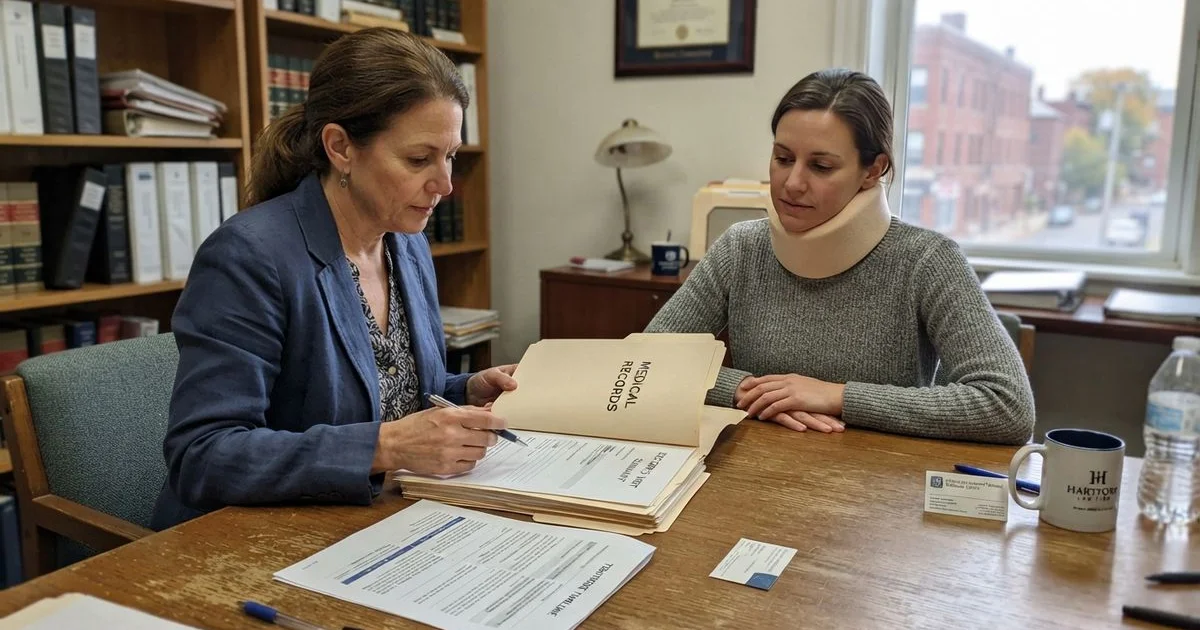
It is common to walk away from a car accident feeling shaken but otherwise fine, only to wake up the next morning barely able to turn your head. That delay is not unusual, and it is exactly why seeing a doctor promptly matters even when nothing seems wrong at the scene.
Why you might not feel hurt right away
Your body releases adrenaline and other stress hormones during a car accident, which can suppress pain signals for hours. Soft-tissue injuries like whiplash often build up gradually, with stiffness and pain peaking a day or two after the crash rather than immediately. A mild concussion can present as nothing more than a slight headache or feeling “off” at first, with clearer symptoms showing up later. None of this means the injury is not real; it means your body’s initial response does not reflect the full picture.
The injuries that get missed most often
| Injury type | Why it is often missed at the scene |
|---|---|
| Whiplash | Neck stiffness and pain often peak 24-48 hours after impact |
| Concussion | Symptoms like headache or brain fog can develop over hours |
| Soft-tissue strain | Swelling and pain build gradually, not immediately |
| Internal bruising | May not be visibly obvious without imaging |
Why the timing of your first visit matters for a claim
Beyond your health, a prompt medical visit creates a clear record connecting your injury to the date of the accident, which matters directly to any car accident claim you file. Insurance adjusters routinely look for gaps between an accident and the first medical visit, and use that gap to argue the injury was unrelated, less serious than claimed, or possibly caused by something else entirely. A visit within a day or two closes that argument before it starts. This is one of several steps worth handling within the first 24 hours after a car accident, alongside documenting the scene and notifying your insurer.
What a good medical visit documents
A doctor’s notes from this first visit typically describe your symptoms, how the accident happened, and an initial assessment, all of which becomes part of the record supporting your claim later. Be specific and complete when describing what hurts, even things that feel minor, since a symptom left out of the initial visit can be harder to connect back to the accident if it worsens later.
Keeping a simple symptom log
A short, dated log of how you feel each day, what hurts, how it affects sleep or daily tasks, and any new symptoms, does more than help your memory. It gives your doctor a clearer picture at follow-up visits and gives your case a consistent, contemporaneous record rather than a reconstructed memory months later. It does not need to be detailed or formal; a few lines a day is enough to be useful.
Following through with treatment, not just the first visit
One visit is a start, not the whole picture. If your doctor recommends physical therapy, imaging, or a specialist referral, following through matters both for recovery and for the claim. Gaps in treatment, even ones caused by a busy schedule or difficulty getting an appointment, are one of the most common things an insurer points to when arguing an injury was not as serious as claimed. If you have to miss or delay an appointment, rescheduling promptly and documenting the reason helps close that gap before it becomes an issue.
What to do if symptoms show up after you have already left the scene
Go to urgent care or your regular doctor as soon as new symptoms appear, rather than waiting to see if they resolve on their own. Mention that you were in a car accident, even a few days prior, so it is documented as part of your evaluation. Keep a simple note of when symptoms started and how they have changed, since this timeline can matter later.
Telling every provider you see about the accident, not just the first one, helps too. If a specialist or physical therapist is not aware the treatment traces back to a car accident, that connection can be missing from their notes entirely, which weakens the overall medical record supporting your claim.
This guide is general information, not medical advice. See a licensed medical provider for any symptoms following an accident, and consult a Connecticut attorney about how your medical records affect your claim.
See our full directory of car accident attorneys, or read our methodology for how listings are ranked.
FAQ
- Why do I need to see a doctor if nothing hurts after my accident?
- Adrenaline and shock can mask pain for hours or days, especially for injuries like whiplash, concussions, and soft-tissue damage that build up gradually rather than hurting immediately.
- How soon after an accident should I get checked out?
- Within a day or two if at all possible. The sooner the visit, the more clearly it ties any injury to the accident rather than something else.
- What happens if I wait a few weeks to see a doctor?
- A gap between the accident and your first medical visit is one of the most common things an insurance company points to when arguing an injury was not caused by the accident, or was not serious.
- Which type of injury is most often missed right after an accident?
- Whiplash and mild concussions are commonly missed initially, since neck stiffness and headaches can take a day or more to fully develop after the impact.